
- 1. Overview of ISO 22000 Standard for Food Processing Facilities
- 2. Key Principles for Designing Food Cleanroom Layouts
- 3. Cleanroom Layout Model for Food Facilities Compliant with ISO 22000
- 4. Supporting Equipment to Optimize Food Cleanroom Layouts
- 5. Common Layout Mistakes That Prevent ISO 22000 Certification
- 6. Cleanroom Layout Checklist for ISO 22000 Food Facilities
- 7. Common Questions About Food Cleanroom Layouts
- 8. Need Help with ISO 22000-Compliant Cleanroom Layout Design?
1. Overview of ISO 22000 Standard for Food Processing Facilities
ISO 22000 is an international standard for food safety management systems, designed to ensure that food is produced, processed, and distributed safely throughout the supply chain. This standard integrates principles from HACCP, GMP requirements, and the ISO 9001 quality management system.
Why is ISO 22000 Certification Important?
- Ensures food safety: Prevents, controls, and eliminates biological, chemical, and physical hazards.
- Builds trust with partners and customers: Especially crucial for export-oriented businesses.
- Complies with legal regulations: Many markets require ISO 22000 as a prerequisite for suppliers.
- Improves internal processes: Optimizes production, reduces errors and waste.
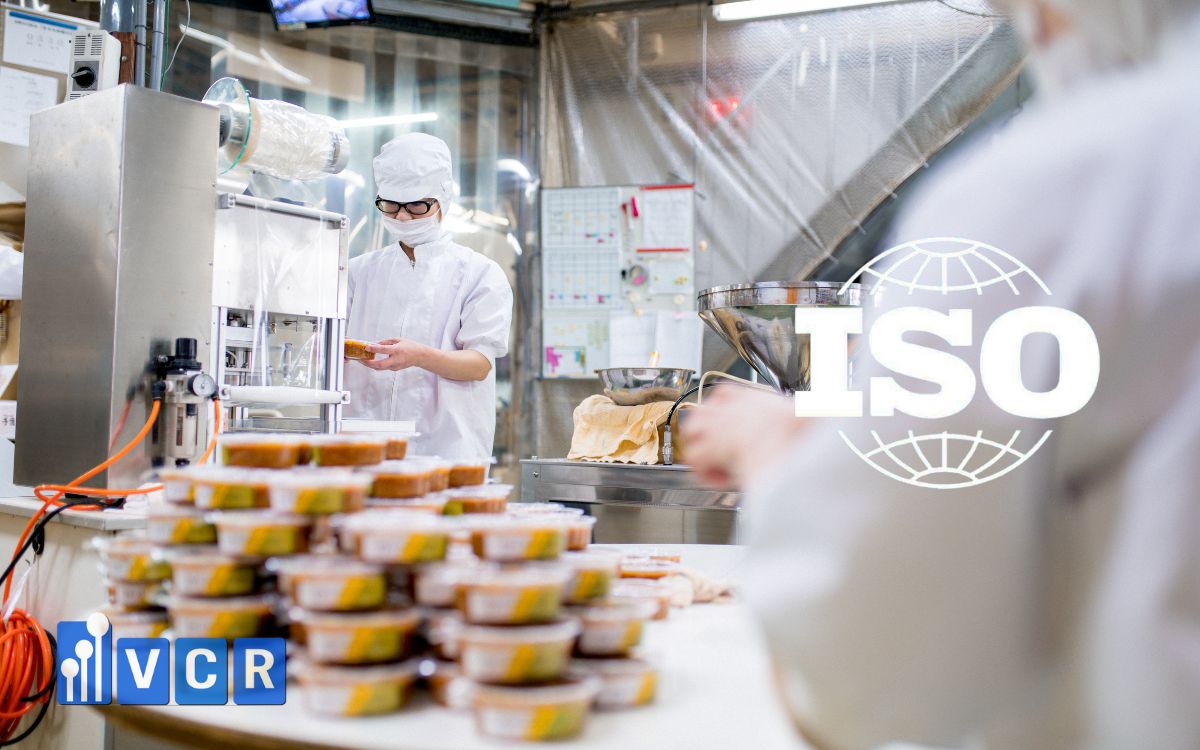
Cleanroom - the “safety zone” within ISO 22000
While ISO 22000 does not explicitly require a cleanroom, it plays a critical role in high-risk food processing environments (such as dairy, processed meats, or packaged foods):
- Controls microbiological and particle contamination: Minimizes cross-contamination risks between processing stages.
- Supports GMP and HACCP compliance: Serves as clear evidence of hazard control practices.
- Provides a stable production environment: In terms of temperature, humidity, and pressure-especially crucial in mixing and packaging areas.
Integrating a cleanroom into the ISO 22000 system not only helps businesses pass audits more easily, but also affirms their commitment to product quality and food safety.
2. Key Principles for Designing Food Cleanroom Layouts
In ISO 22000-certified food plants, the cleanroom layout is not just a technical element-it is the foundation for hazard control. A proper layout helps prevent cross-contamination, streamlines workflow, and simplifies GMP/HACCP compliance during audits.
"One-way flow" principle - avoid cross-contamination
Layout must follow a linear workflow, such as:
Raw materials → Pre-processing → Processing → Packaging → Storage → Shipping
- No backflow or cross-paths between raw and finished products.
- Personnel, materials, and product flows must be strictly separated.
Segregated flow for 3 main elements
Personnel Flow
- Separate gowning areas: primary (changing shoes), secondary (putting on uniform), and disinfection zone.
- Entry through an air shower or sanitation chamber before entering the production area.
Raw Material Flow
- From raw material storage → through preprocessing → to processing.
- Should not share passageways with finished products.
- Use pass boxes or pressure-controlled doors for material transfer.
Finished Product Flow
- From packaging → cold storage → shipping zone.
- Must avoid crossing paths with waste, raw materials, or unclean equipment.
Mandatory Functional Areas in Layout
|
Area |
Main Purpose |
Technical Requirements |
|
Gowning Room |
Prepare personnel for clean entry |
Air Shower, interlock door system |
|
Raw Material Prep Area |
Handle raw food materials |
Easy to clean, proper drainage |
|
Processing Area |
Cooking, mixing, heating, frying... |
Control of temperature and humidity |
|
Packaging Area |
Final packaging and labeling |
Higher cleanliness level (e.g. ISO Class 8) |
|
Cold Storage |
Finished product storage |
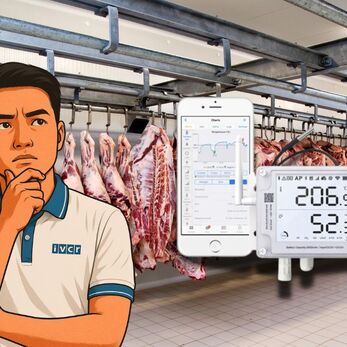
Temperature and humidity monitoring systems |
Note: All areas should be physically separated, equipped with pressure-controlled doors or airlocks, clear signage, and access control systems to maintain proper directional flow.
3. Cleanroom Layout Model for Food Facilities Compliant with ISO 22000
A well-designed layout not only ensures compliance with ISO 22000 but also enables smooth plant operation, minimizes production disruptions, and reduces cross-contamination risks.
One-Way Flow - Overall Layout Structure
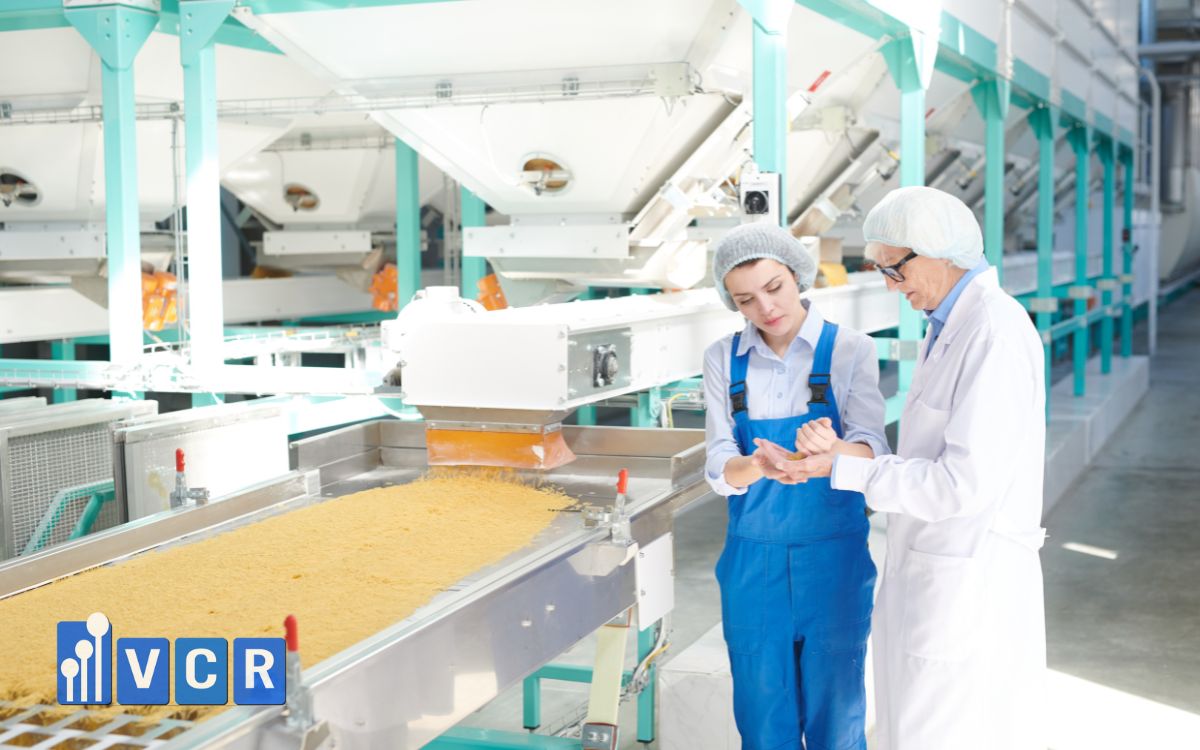
The food production process should follow this sequence:
- Gowning and personnel control area
- Raw material storage
- Raw material preprocessing area
- Processing area
- Packaging area
- Finished goods storage
- Shipping area
Each area must be physically isolated with solid partitions and equipped with appropriate pressure control, temperature regulation, and compatible equipment.
Suggested Area Zoning and Cleanliness Classification (ISO Class)
|
Area |
Function Description |
Cleanliness/Typical Equipment |
|
Gowning Room |
Personnel changing and disinfection |
Air Shower, storage cabinets, Pass Box |
|
Raw Material Prep Area |
Washing, peeling, cutting, sorting raw food |
Cleanroom lights, stainless steel tables, sinks, anti-slip flooring |
|
Processing Room |
Cooking, mixing, heating, frying |
FFU, exhaust system, moisture-resistant flooring |
|
Packaging Area |
Final packaging and labeling |
Interlock, Pass Box, stainless steel tables, ISO Class 8 |
|
Cold Storage / Preservation |
Storage of finished products |
Industrial refrigerators, temperature-humidity sensors, data loggers |
Important Notes:
- Do not use the same Pass Box for both raw and finished products.
- Personnel and material flows must remain fully separated from start to finish.
- ISO cleanroom class (if applied) should increase from prep → processing → packaging.
- Positive pressure should be maintained in packaging areas to prevent airborne contamination.
A properly designed layout not only simplifies ISO 22000 certification but also provides a foundation to upgrade to higher-level standards such as FSSC 22000, BRC, and advanced HACCP systems.
4. Supporting Equipment to Optimize Food Cleanroom Layouts
To maintain a closed production cycle and avoid contamination risks, the correct use of supporting equipment is essential. Below are three commonly used devices in food cleanroom layouts under ISO 22000 standards.
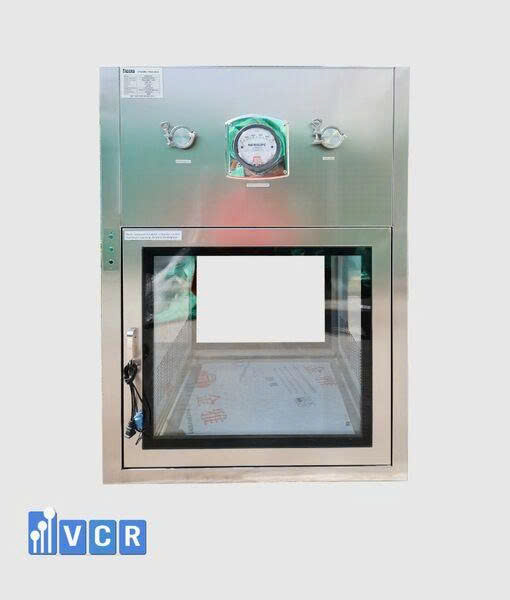
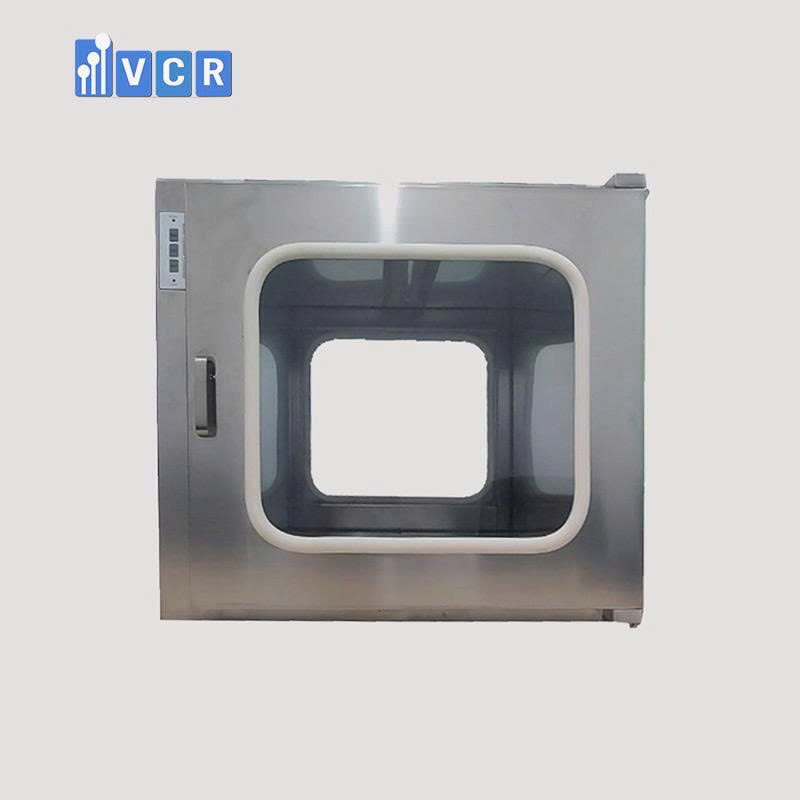
Pass Box - Safe Material Transfer Solution
Function:
Used to transfer items between clean-to-clean or clean-to-non-clean zones without opening room doors.
Minimizes air exchange and contamination between spaces.
Recommended Features:
- Interlocking doors: Only one door opens at a time.
- Optional UV sterilization or HEPA recirculation filtration.
Application Points:
- Between preprocessing and processing areas
- From packaging to finished goods storage
Choose Pass Boxes with appropriate size and material (powder-coated steel or stainless steel 304 for food use).
Air Shower - Personnel Dust Control
Function:
Blows off dust and particles from personnel clothing before entry into clean areas.
Helps prevent external contamination from entering processing zones.
Recommended Features:
- Multi-directional nozzles ≥ 20-30 m/s
- Integrated HEPA or ULPA filtration
Application Points:
- Entry between gowning room and preprocessing/processing areas
Air Showers are especially important in dairy, meat, and seafood processing plants where microbial control is critical.
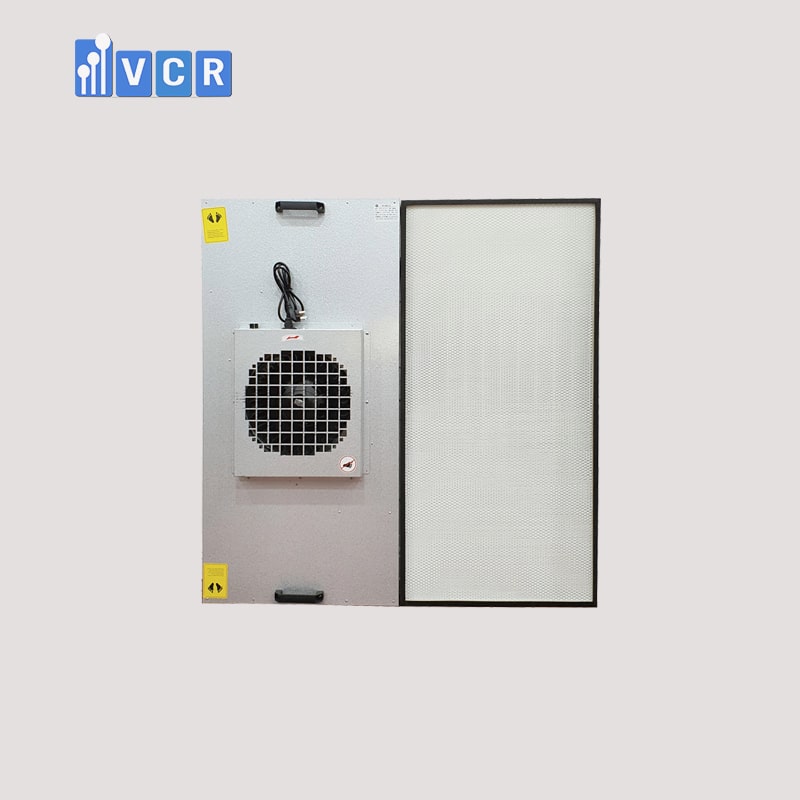
FFU (Fan Filter Unit) - Clean Air at Point of Production
Function:
Ceiling-mounted air filtration unit that maintains localized clean air zones.
Delivers ISO Class 5-8 clean air depending on application needs.
Recommended Features:
- Energy-saving DC fan motors
- HEPA or ULPA filters
- Easy integration into ceiling panels or stainless steel frames
Application Points:
- Mixing, packaging, or any zone with direct food contact
Using FFUs instead of central air filtration systems offers flexibility for production expansion, especially beneficial for small and mid-sized enterprises.
5. Common Layout Mistakes That Prevent ISO 22000 Certification
Even with modern facilities, many food factories fail to meet ISO 22000 standards due to fundamental layout issues. Here are three of the most common mistakes:
1. No Separation Between Raw Materials and Finished Products
Problem:
Raw materials and finished goods share the same corridors, entryways, or transfer areas.
This creates a high risk of microbiological cross-contamination-especially serious in fresh or cold-processed foods.
Consequences:
- Non-compliance with hazard control under HACCP.
- High likelihood of failure during ISO 22000 audits.
Solution:
- Design separate flow paths for raw materials and finished products.
- Use pass boxes or one-way corridors to avoid crossover.
2. Lack of Buffer Rooms / Airlocks at Transition Points
Problem:
Doors open directly from non-clean zones into clean production areas (e.g., from outside into processing).
No buffer space exists to regulate pressure and filter air.
Consequences:
- Loss of positive pressure in cleanrooms allows contaminated air to enter.
- Increased risk of environmental cross-contamination.
Solution:
- Install airlocks or buffer zones at all critical transitions.
- Use interlocking doors or positive pressure systems between rooms.
3. No Multi-Step Gowning Area
Problem:
Staff change clothes only once before entering production.
There is no clear distinction between personal footwear and cleanroom footwear.
Consequences:
- Personnel carry dust and microorganisms into processing areas.
- Fails to meet personal hygiene control requirements under ISO 22000.
Solution:
- Build a 2-3 step gowning zone: shoe change → gowning → disinfection.
- Use sticky mats, air showers, and separate personal storage lockers.
6. Cleanroom Layout Checklist for ISO 22000 Food Facilities
Want to ensure your cleanroom layout meets ISO 22000 requirements? Use this checklist-missing any item may result in failed certification.

Layout Structure & Functional Areas
- Complete areas: gowning room - raw prep - processing - packaging - finished goods storage
- Each area is clearly separated to avoid physical and microbial contamination
- Airlocks are present at all critical transition points (e.g., from outside → clean zones)
Workflow Design
- One-way product flow from raw material to finished goods
- Raw materials do not intersect with finished product flow
- Personnel, raw materials, and waste flows are fully separated and documented
Contamination Control Equipment
- Air Shower installed at the entrance to production
- Pass Boxes used at material transfer points
- FFUs or localized air filtration systems installed in packaging areas
- Cleanroom lighting, hygiene signs, and temperature-humidity controls installed
Safety and Traceability
- Signage and access control for each area
- System for recording flow movements for traceability
- Optimized placement of cameras, sensors, and hygiene monitoring tools
7. Common Questions About Food Cleanroom Layouts
- Is it mandatory to use FFUs in food cleanrooms?
→ Not mandatory, but highly recommended in areas requiring dust and microbial control-especially dry processing, packaging, or direct-contact food zones. - Does ISO 22000 require a specific floor layout?
→ No detailed layout drawing is required, but the standard mandates that companies must demonstrate contamination hazard control.
→ A well-planned layout is critical visual evidence during food safety system audits. - Can one Pass Box be used between multiple zones?
→ Not advisable.
→ Each Pass Box should be designated for a specific flow (e.g., raw materials, finished goods, utensils, waste) to prevent cross-contamination and comply with ISO 22000 segregation principles.
8. Need Help with ISO 22000-Compliant Cleanroom Layout Design?
Creating a cleanroom layout that meets ISO 22000 standards not only makes audits easier but also provides a reliable foundation for producing safe, consistent, and scalable food products.
VCR specializes in designing, consulting, and providing turnkey cleanroom solutions for food, cosmetics, and pharmaceutical plants that comply with ISO, HACCP, and GMP standards.
What you get when working with VCR:
- Free consultation for preliminary layout planning
- Complete supply of cleanroom equipment: Pass Boxes, FFUs, Air Showers...
- End-to-end support from design to installation and final acceptance
Contact us now to receive actual layout samples:
Hotline: 090.123.9008
Email: [email protected]
Website: https://phongsachthucpham.com/
Diep VCR